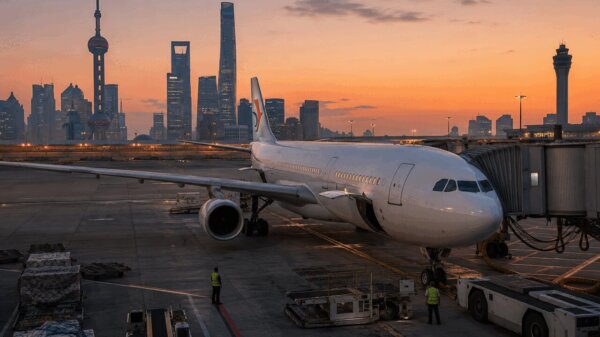
Air Macau has expanded its May and June 2026 schedule reductions to 26 percent of planned flights, according to the latest schedule filing update. For a carrier built around short-haul regional links, that is a severe contraction, and it underlines how vulnerable smaller network structures remain when external pressures start piling up.
What The Airline Has Cut
The revised schedule shows one-way departures falling from 2,604 to 1,930 across the two-month period. Recent changes include delayed resumption of Macau-Jakarta and deeper cuts on routes such as Seoul Incheon, Shanghai Pudong, Beijing Capital, Chengdu Tianfu and Taipei Taoyuan. These are not just peripheral adjustments. They touch several of the city’s most important regional air links.
The scale matters because airlines like Air Macau do not have the same room to hide volatility that larger multi-hub groups do. When a mid-sized regional airline pulls this much flying in such a short time, it usually means management is trying to preserve cash and operational stability at the same time.
Why This Matters Beyond Macau
Macau sits at an interesting crossroads between mainland China, Northeast Asia and Southeast Asia. That makes Air Macau a useful indicator of how secondary and tertiary international demand is behaving. Large flagship airlines often get attention first, but smaller carriers can reveal strain earlier because they have less cushion and fewer ways to reallocate risk.
There is also a market-structure lesson here. Aviation recoveries are never uniform. Even when major trunk routes and premium intercontinental markets look healthier, regional carriers can still be facing softer demand, thinner yields or operational uncertainty that forces sharper retrenchment.
The Bottom Line
Air Macau’s latest cuts are a reminder that aviation stress does not disappear just because the biggest brands sound more optimistic. In regional markets, the adjustment can be harsher and more visible. A quarter of planned flying coming out of the schedule is not noise. It is a sign of a carrier trying to protect itself in a still-fragile environment.