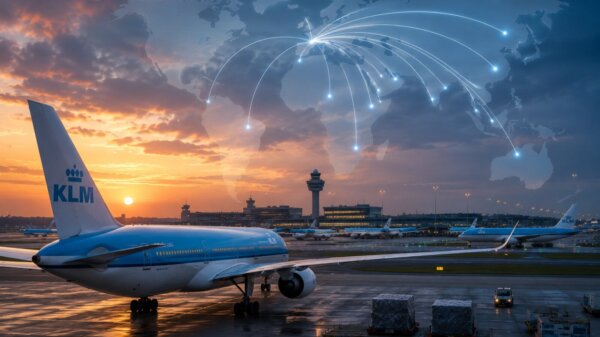
Air France-KLM’s latest warning is not subtle. The group now expects its 2026 fuel bill to rise by $2.4 billion, and that single number is large enough to reshape capacity planning all by itself.
What happened
On 30 April 2026, Reuters reported that Air France-KLM downgraded its capacity outlook after saying its total fuel costs for the year were expected to reach $9.3 billion. Nearly half of the incremental hit, about $1.1 billion, is expected in the second quarter alone.
Management said first-quarter results were better than expected, but the company made clear that the most painful fuel effects had not yet shown up in the numbers. In other words, the quarter looked tolerable partly because the real stress sits ahead.
Chief executive Ben Smith said the fuel shock linked to the Iran war would weigh on the coming quarters, which is exactly the kind of sentence airline investors hate because it suggests today’s earnings are not yet telling the full story.
Why it matters
This is more than a difficult quarter for one airline group. Air France-KLM is one of Europe’s most important aviation barometers. When it trims its growth assumptions, it is effectively admitting that even the continent’s biggest operators cannot simply outgrow a fuel shock of this size.
For travelers, the risk is not just higher fares. It is also that airlines become more selective about where they grow, which markets they defend, and how generous they feel about schedule frequency. A capacity downgrade can show up as fewer choices long before it shows up as a dramatic route cancellation.
For the industry, the bigger signal is that hedging has limits. Airlines can cushion volatility, but once a cost shock becomes large enough, strategy begins to bend around it.
What travelers should watch
Watch which parts of the Air France-KLM system absorb the pain. Transavia, Air France, and KLM do not all face the same demand conditions or competitive pressures. Capacity discipline in one brand can tell you a lot about where the group feels weakest.
Also keep an eye on fares for leisure-heavy Mediterranean and long-haul connecting markets. Those are often the routes where airlines test how far they can pass through rising costs.
My take
I think this story matters because it forces some honesty into the market. Airlines have spent a lot of time talking about premium demand, operational recovery, and network strength. Air France-KLM is reminding everyone that the fuel bill can still overrule a great deal of that optimism.
When the extra cost runs into the billions, this stops being a finance footnote and becomes a network story.