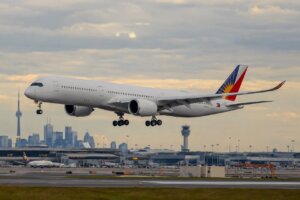
Saudia now appears to be aiming its A321XLR inauguration at a one-off Jeddah-Madrid rotation in early June, but reservations are still not available, making this look more like a cautious test marker than a fully locked launch.
What happened
Saudia has revised the planned entry of its Airbus A321XLR. The latest schedule filing points to a one-time Jeddah-Madrid operation on 3 June 2026 as the tentative debut, but reservations for the flight are reportedly not available.
That combination matters. A schedule can carry a provisional aircraft assignment without the airline being ready to sell the operation with confidence. When a new type is involved, especially one as strategically interesting as the A321XLR, those small signs of caution are worth paying attention to.
Why it matters
The A321XLR is one of the most consequential aircraft in current airline planning because it changes what a long thin route can look like. It allows airlines to fly sectors that previously needed either a larger widebody commitment or a weaker one-stop proposition. For a carrier like Saudia, that opens real possibilities across Europe and beyond.
Madrid is an intriguing choice because it hints at how Saudia may want to use the aircraft: not merely on short regional hops, but on strategically relevant medium-long haul city pairs where a premium narrowbody or lower-risk long-haul narrowbody model makes sense.
What the hesitation suggests
At the same time, the lack of open reservations suggests this is not yet a fully settled commercial launch. Airlines tend to be extra careful with first flights of new types because those flights draw scrutiny from customers, media, regulators and internal operational teams. A soft or tentative debut can be a way to keep flexibility while the last moving parts are still being aligned.
That does not mean trouble. More often, it means discipline. New fleet introductions are expensive, highly visible and operationally sensitive. The winners are usually the airlines that treat the first few rotations as something to stage carefully, not something to rush for headlines.
Bottom line
Saudia’s revised A321XLR plan is a reminder that fleet innovation often arrives in cautious steps rather than dramatic ones. Madrid may still become the type’s first visible outing for the airline, but until the flight is openly bookable and stable, it remains a signpost rather than a finished launch.