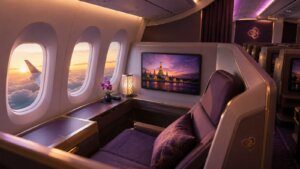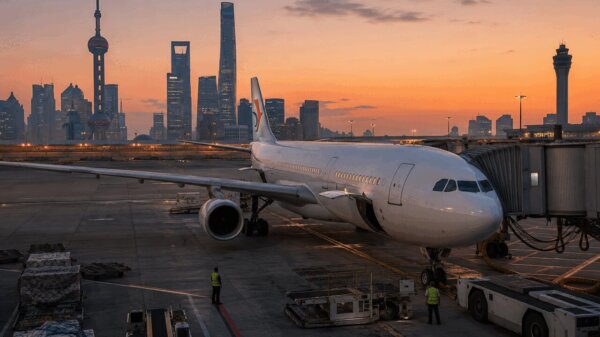
Cathay Pacific hopes to introduce its next-generation first class suites on the Boeing 777-9 by the end of 2027, but the timing remains tied to Boeing’s long-delayed 777X program. That makes Cathay’s first class future unusually dependent on aircraft certification, fleet retrofits, and how quickly the airline can bridge the gap between its old 777 First cabin and its promised new flagship product.
The 777-9 Carries Two Jobs for Cathay
For Cathay Pacific, the Boeing 777-9 is not just a replacement aircraft. It is also the planned launch platform for an entirely new first class suite.
That gives the aircraft a double strategic role. The 777-9 is meant to provide the range, capacity, and efficiency Cathay needs for flagship long-haul markets. At the same time, it is supposed to restore momentum to the airline’s most premium cabin, complementing the Aria Suite business class now being installed on Boeing 777-300ER aircraft.
Cathay executives have said the airline is in close conversation with Boeing and hopes the first 777-9 delivery can support a late-2027 product launch. But the timeline is not fully in Cathay’s hands, because Boeing must complete certification and begin 777X deliveries before the airline can deploy the aircraft commercially.
A Shrinking First Class Footprint
The transition creates a delicate problem. Cathay is refurbishing its existing 777-300ER fleet with Aria Suite business class, and aircraft that previously had first class are being converted to a larger business class layout. That improves business class consistency, but it reduces the number of flights where Cathay can offer its current first class cabin.
The old Cathay 777 First product remains well regarded by many frequent flyers, even though it dates from a different era of premium travel. As more 777-300ERs go through refurbishment, Cathay risks having a shrinking first class network before the 777-9 arrives to rebuild it.
The airline appears to be trying to manage that timing by refitting all 35 777-300ERs rather than limiting the program to the earlier plan of 30 aircraft. That gives Cathay more fleet flexibility, but it does not remove the basic pressure created by Boeing’s schedule.
Why the New Suite Matters
Cathay’s future first class is important because Hong Kong remains a premium long-haul market, and Cathay competes directly with airlines that have made major investments in suites, lounges, dining, and elite recognition. Singapore Airlines, Emirates, Japan Airlines, ANA, Air France, Lufthansa, and several Gulf carriers have all raised expectations around the very top of the aircraft.
A new 777-9 suite would let Cathay reposition first class as a modern flagship rather than a beloved legacy product. It would also give the Marco Polo and Asia Miles ecosystem a more aspirational redemption target at a time when loyalty programs increasingly depend on premium cabin desirability.
The Certification Clock Is Ticking
The 777X program has been delayed for years, and Boeing still needs to move from testing to certification to customer deliveries. Cathay’s leadership sounds cautiously optimistic, but the airline cannot publish a firm launch schedule until the aircraft path is clearer.
That uncertainty matters for passengers too. A customer booking Cathay first class in the next 18 months may see fewer aircraft with the old cabin, while the new cabin remains just out of reach. Cathay has to manage expectations carefully so that the transition feels like a premium upgrade rather than a disappearing product.
Cathay’s Premium Future Depends on Timing
The big story is not simply that Cathay wants new first class suites. It is that the airline’s premium roadmap is now closely tied to the 777-9’s arrival.
If Boeing delivers close to the latest target, Cathay can use the 777-9 to relaunch first class with real impact. If delays stretch further, Cathay may spend longer in an awkward middle period where Aria Suite business class improves the fleet, but first class becomes rarer. For a carrier that built much of its reputation on long-haul premium travel, that timing is more than a fleet-planning detail.