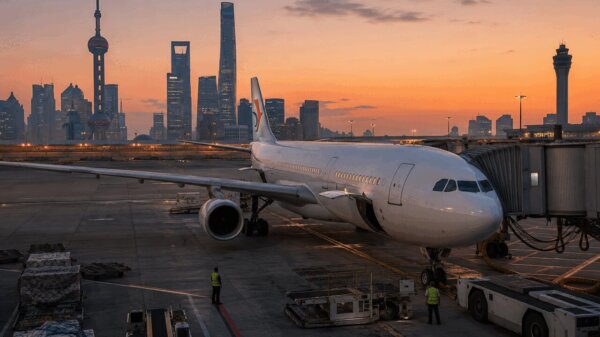
Cathay Cargo has returned to scheduled freighter operations in Bangkok for the first time in a decade, launching a weekly Boeing 747-400F service that adds dedicated capacity for Thai exporters and freight forwarders through Hong Kong. It is easy to read that as a straightforward cargo network addition. The stronger interpretation is that Cathay sees enough value in Thailand’s export mix to justify giving the market a more direct and reliable cargo channel again.
Why Bangkok Matters In Cargo
Cathay described Bangkok as a high-potential market and an emerging high-tech manufacturing hub in Southeast Asia. That framing matters because air cargo strategy is rarely only about volume. It is also about the quality of what moves, the yield it can support, and the onward connectivity available once it reaches a hub.
By restoring a scheduled freighter rather than relying only on bellyhold or ad hoc options, Cathay is saying Bangkok deserves dedicated uplift again. That is a meaningful signal in a region where electronics, higher-value industrial supply chains, and time-sensitive freight are increasingly important.
Why Hong Kong Benefits Too
The Bangkok return also reinforces Hong Kong’s role as a cargo connecting point. Dedicated freighter capacity is not just about Thailand. It is about feeding more predictable flows into Cathay’s wider network and making the Hong Kong hub more useful for regional exporters that need consistent onward links.
That matters because Asian cargo competition is tightening. Carriers need to show not only that they can move freight, but that they can do it through hubs with enough scale and schedule reliability to win repeat business from forwarders and manufacturers.
The Strategic Read
Cathay Cargo’s Bangkok move fits a broader pattern in which airlines are trying to position themselves around changing Asian supply chains rather than waiting passively for traffic to appear. For readers who track airline strategy, this is one of those cargo stories that says something wider about where the next decade of regional trade connectivity may be headed.