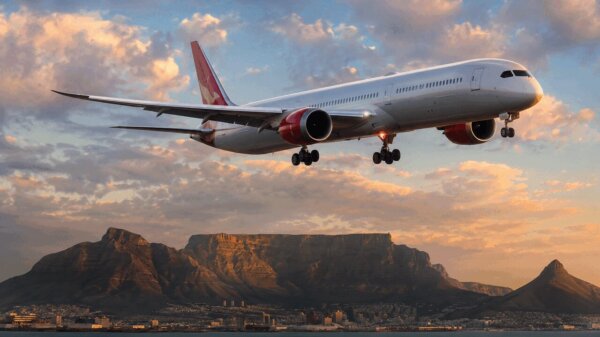
Ethiopian Airlines converting six Boeing 787 options into firm orders is not the loudest airline story of the season. It may be one of the clearest. While parts of the industry are focused on survival, pricing pressure, or tactical route shifts, Ethiopian is still doing something more structural: it is ordering for the network it expects to need next.
What happened
On 21 April 2026, Ethiopian Airlines and Boeing announced that the carrier had converted six 787-9 Dreamliner options from its 2023 order into firm purchases. Ethiopian said the aircraft will be used to expand its intercontinental network from Addis Ababa and to increase cargo capacity as long-haul demand continues to rise.
The airline described the move as part of its sustainable growth strategy. Boeing, for its part, framed the 787 as a central piece of Ethiopian’s continuing fleet modernisation. Ethiopian already operates Africa’s largest 787 fleet and uses the type across intercontinental routes to Europe, Asia, and North America, as well as key African sectors.
That context matters. This is not a one-off order placed in optimism. It is an extension of an operating model that the airline already knows how to use.
Why it matters
Ethiopian has spent years building one of the most durable airline growth stories outside the usual Gulf, North American, and East Asian spotlight. It has scale, a strong Addis Ababa hub, a broad African network, and a habit of making fleet decisions that support a bigger network logic.
The 787 order reinforces that. Long-haul growth is not just about adding seats. It is about range, cargo economics, and the ability to serve thinner city pairs more effectively than older aircraft allow. That is especially important for an airline that needs to link Africa not only to the world, but to itself.
There is also a psychological dimension to these orders. The airlines that keep investing through uncertainty often end up in the best position when demand settles into a new pattern. Ethiopian looks determined to be one of those airlines.
What travelers should watch
Watch where Ethiopian chooses to deploy incremental long-haul capacity over the next several seasons. If the airline uses the added flexibility to deepen underserved Africa-Europe or Africa-Asia links, it will strengthen its role as the continent’s most important connector.
Cargo should stay on the radar too. Belly freight is not glamorous, but it often shapes route viability more than passengers realise.
My take
I think Ethiopian’s strength is not just that it grows. It is that its growth usually looks coherent. The airline tends to order with a view of what the wider system needs, not just what makes a good headline.
That is why this six-aircraft move deserves attention. It is not huge in isolation. But it is another sign that Ethiopian still believes the next map of long-haul aviation will have Africa more centrally written into it. And the airline clearly intends to be the carrier doing most of the writing.